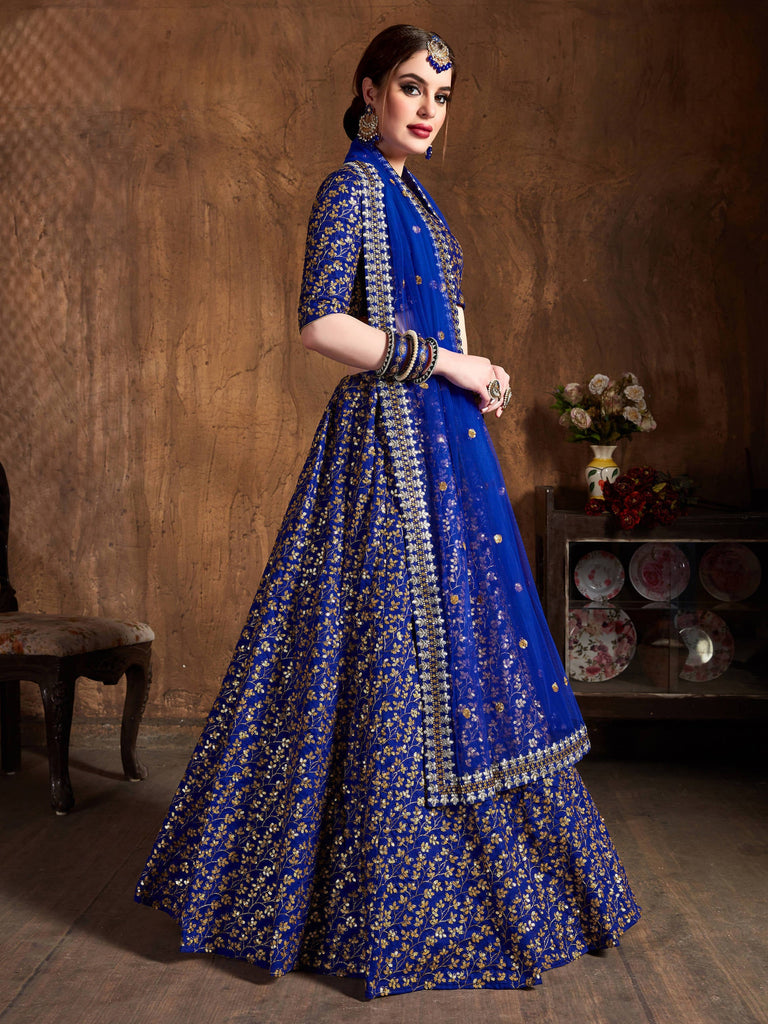
Hartalika Teej dressing has a special balance to strike: the outfit should feel festive enough for puja and family photographs, but it also needs to stay manageable through a day that may include fasting, sitting for rituals, visiting relatives and moving between indoor and outdoor spaces. For 2026, lehenga choli is a strong option because it can look ceremonial without forcing one single styling formula.
The most useful way to choose a Teej lehenga is not to start with trend labels. Begin with colour, movement, fabric weight and how much work you actually want to carry. Green remains closely associated with Teej dressing, while pink, rani, maroon, mustard and festive multicolour combinations can all work beautifully when styled with intention.
Why green still leads Hartalika Teej style
Green works especially well for Hartalika Teej because it feels fresh, traditional and easy to coordinate with gold-tone jewellery. The colour does not have to be one exact shade. Mehendi, parrot, bottle, emerald, olive and teal-leaning greens can create very different moods. A brighter green feels lively for daytime puja, while deeper tones look more formal for evening family gatherings.
If you already own green bangles, a gold blouse or a neutral dupatta, choosing a green lehenga can also reduce the need for extra purchases. The strongest festive wardrobes are often built by reusing accessories rather than replacing every part of the look.

Pink, rani and maroon create a softer festive direction
Not everyone wants green from head to toe. Pink, rani and maroon are useful alternatives because they still coordinate naturally with traditional jewellery and can transition well into wedding-season wear later. Rani pink gives a brighter celebratory effect, while maroon feels richer and slightly more formal. Pale or medium pink can be softened further with pearl, kundan or antique-gold accessories.
A practical approach is to wear the stronger colour in the lehenga or blouse, then keep the dupatta quieter. If the outfit already contains mirror, sequin, zari or embroidered work, adding a heavily embellished dupatta may make the total look feel busier than intended.


Judge a lehenga by movement, not only by the photograph
A wide flare looks dramatic in product photography, but for a long festival day the more important question is how the skirt behaves while walking, sitting and standing. Canvas, lining, can-can, gathers and fabric weight all change the way a lehenga moves. More structure can create a grander silhouette, while softer construction can be easier for extended wear.
Read the product description carefully for stitching state, waist information and included pieces. Do not assume every lehenga includes a stitched blouse, and do not assume an outfit described as a set will fit exactly like another set from the same category. Semi-stitched, fully stitched and unstitched pieces require different preparation before the festival.

Layered lehengas and shrugs are useful when you want less dupatta management
A shrug or jacket can give the outfit visual depth without requiring constant pallu adjustment. This can be particularly convenient if you are moving between puja, family visits and photographs. The layer can also help a relatively simple blouse-and-skirt combination feel more complete.
Bandhani-inspired shrugs bring another advantage: they introduce traditional print without forcing the entire lehenga to be printed. Teal, red and green combinations can work especially well for festive daytime dressing.


Print versus embroidery: choose according to the hours you will wear it
Printed lehengas often create visual interest with less surface weight than dense embroidery. They can be a sensible choice for women who expect to wear the outfit for many hours. Ajrakh-inspired prints, Bandhani motifs and multicolour patterns pair especially well with simpler jewellery because the fabric already contributes detail.
Embroidery, mirror and gota work are better when you want the outfit itself to provide most of the festive impact. The key is not to make every surface equally elaborate. If the skirt is highly detailed, a cleaner blouse or more restrained necklace can make the finished look feel more intentional.


Practical dupatta drapes for puja and family visits
A secure shoulder drape is usually easier than a very loose dupatta when you need your hands free. Pin the dupatta at the shoulder and, if the fabric is slippery, add a discreet second pin at the waist. Another useful option is the front-fall drape: one end stays anchored at the shoulder while the rest falls in a clean line across the front.
If the blouse or lehenga already contains strong work, avoid over-folding an embellished border where it hides the design. With a printed or simpler outfit, a contrast dupatta can be the visual highlight. Always test the drape while sitting before the event; a style that works standing may become awkward during a long puja.
Jewellery, bangles and footwear: keep the outfit hierarchy clear
Choose one dominant jewellery zone. If your neckline supports a statement necklace, keep earrings smaller. If the blouse has a high or ornate neckline, skip the heavy necklace and let jhumkas or chandbalis frame the face. A bangle stack can then carry the colour story without adding weight near the neckline.
Green, gold and red bangles are easy Teej combinations, but they do not need to match every colour exactly. Mixed metal bangles can make an outfit more reusable. For footwear, prioritize a pair you have already worn for several hours. Juttis, low block heels and stable sandals generally fit the visual language of lehengas without making movement unnecessarily difficult.
Hair and makeup should support the silhouette
With a heavily detailed blouse, a bun or half-up style can expose the neckline and earrings. With a simpler blouse, soft waves or a braid can add visual texture. Fresh flowers can look beautiful with traditional palettes, but they are optional rather than essential.
For makeup, choose one main focus. A deeper lip can complement maroon and rani outfits; softer lip colour allows eye makeup and jewellery to stand out. Green lehengas work well with warm gold, bronze and brown tones. The aim is harmony rather than matching every pigment to the clothes.
A Hartalika Teej lehenga shopping checklist
Before ordering, check the stitching state, waist allowance, blouse construction, dupatta inclusion, fabric, lining and any measurements provided. Confirm whether the product is active and saleable at the time you shop, because availability can change. If alteration will be needed, leave enough time rather than depending on a last-minute tailor.
Think about the full cost of the look. If you already own suitable jewellery and footwear, a slightly more distinctive lehenga may offer better value than buying a cheaper outfit plus several new accessories. Conversely, if you have a strong blouse or dupatta at home, a simpler skirt may be all you need.
Rewear the lehenga after Teej
A good festival purchase should not retire after one day. Pair the skirt with a plain silk blouse for a wedding-related event, use the blouse with a saree, or wear the shrug over a simpler skirt or palazzo. Printed lehengas can work for Navratri and family celebrations; deeper maroon or zari-detailed pieces can move into wedding season.
The easiest way to improve cost per wear is to avoid buying a look that is so specifically styled that none of its pieces can separate. Look for components that can live independently in your wardrobe.
Where to browse live ClothsVilla options
For a broader comparison, browse the ClothsVilla lehenga choli collection and compare silhouettes, stitching states and colour stories. If green is your priority, the green lehengas collection can narrow the search. Always rely on the current product page for live selling status and specific product details.
Frequently asked questions
Is green compulsory for Hartalika Teej?
No. Green is a popular traditional choice, but pink, rani, maroon, mustard, teal and multicolour festive outfits can also be styled appropriately.
Is a lehenga comfortable for a long puja?
It can be, provided the waist, lining, fabric weight and flare are manageable. Test sitting and walking before the festival.
Should I choose mirror work or print?
Mirror and gota work create more direct festive impact. Prints often feel visually lively with less surface embellishment. Choose according to your comfort and accessory plan.
Can I wear a shrug lehenga for Teej?
Yes. A coordinated shrug can be practical if you prefer less dupatta management and want a layered silhouette.
How can I make my Teej lehenga look expensive without overspending?
Focus on fit, neat draping, one strong jewellery element, pressed fabric and coordinated footwear. A balanced outfit usually looks more polished than one overloaded with accessories.
Final styling note
The best Hartalika Teej lehenga is the one that still feels good after the photographs are finished. Start with a colour you genuinely enjoy, check how the silhouette moves, keep the drape secure and let one or two details carry the festive mood. Green and pink are beautiful starting points, not rigid rules. With thoughtful accessories and rewear planning, a Teej outfit can become a useful part of your festive wardrobe rather than a one-day purchase.