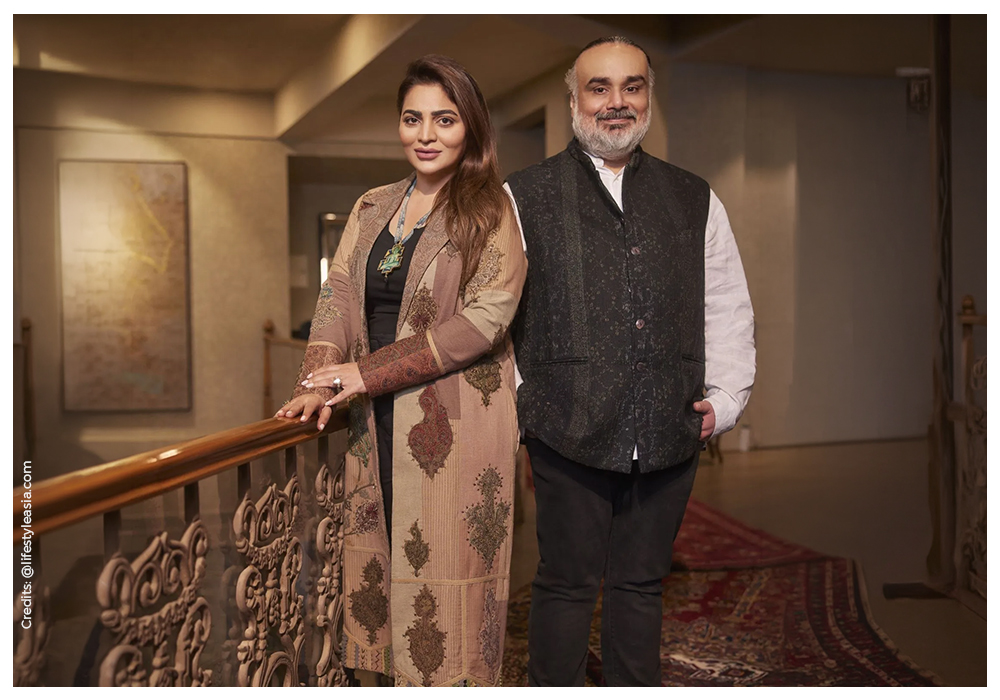
Few stories carry the emotional and visual weight that Ramayana holds in the Indian imagination. Every gesture, every garment, every colour choice in a retelling of this epic speaks to centuries of devotion, memory and artistic reference. For costume designers Rimple and Harpreet Narula, known for their work on Padmaavat and Heeramandi, dressing this world meant stepping into a creative responsibility that few projects demand.
The duo have built their reputation on a deep understanding of Indian textile history, regional craft traditions and the emotional language of clothing. Their work has never simply dressed a character. It has built one. With Ramayana costumes, that approach takes on new meaning. Here, costume becomes a bridge between mythology and the audience’s collective memory of how these figures have always looked in temple art; calendar paintings and oral storytelling passed down through generations.
The Designers’ Creative Vision
Rimple and Harpreet Narula approached the Ramayana costumes as custodians rather than inventors. Their inspiration drew heavily from temple sculpture, Pichwai and Pahari miniature paintings, vintage calendar art, and traditional deity poshaks worn in temples across India. These references carry a visual grammar that audiences recognise instinctively, even if they cannot name the source.
The designers’ philosophy centred on honouring that grammar while allowing room for cinematic scale. Every costume needed to feel handcrafted rather than manufactured, rooted in real textile traditions rather than generic fantasy. This meant archival research into historic weaves, natural dye processes and regional embroidery styles, paired with collaborations with artisans who still practise these crafts today. For Rimple and Harpreet Narula, authenticity was non-negotiable, even when working at the scale a film of this magnitude demands.
Ranbir Kapoor as Lord Ram: A Wardrobe of Discipline and Restraint
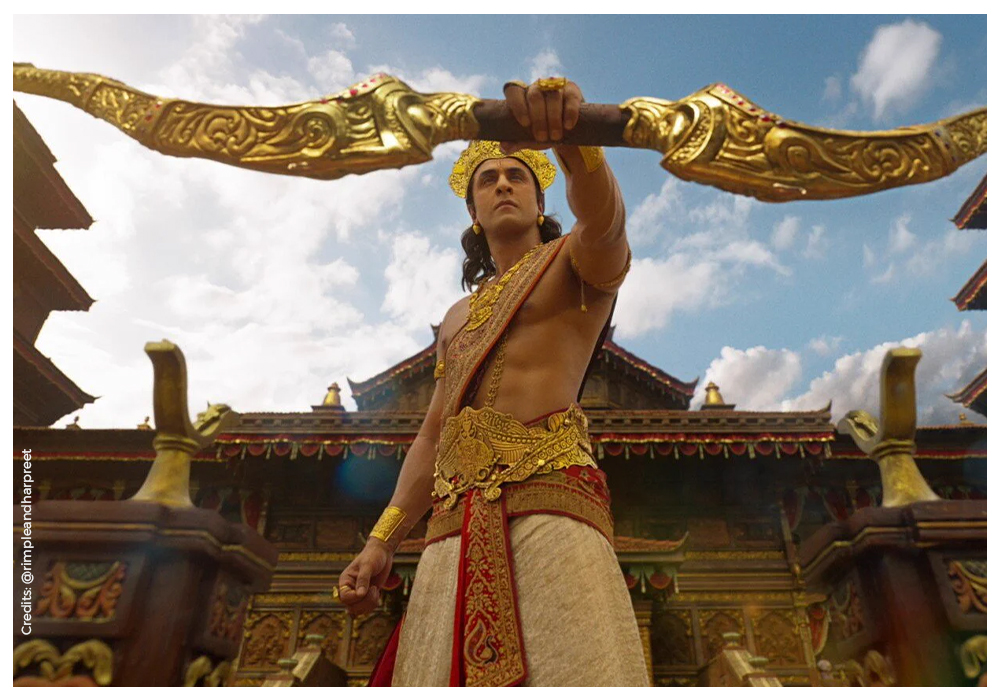
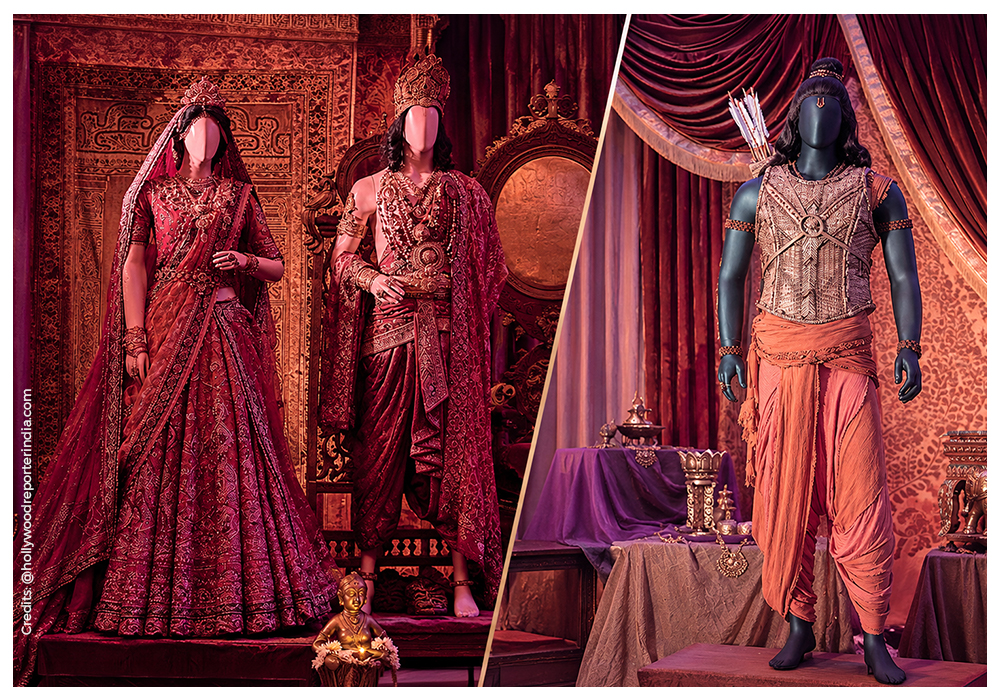
Dressing Ranbir Kapoor’s Ram look meant resisting the urge to overdesign. The costume design leaned into ivory and saffron, colours long associated with purity, dharma and solar symbolism in Indian iconography. Motifs inspired by the sun run through the detailing, a quiet nod to Ram’s lineage as part of the Suryavanshi dynasty.
Rather than ornate embellishment, the silhouette stays restrained. The intention here was for the clothing to reflect Ram’s internal qualities: discipline, humility and quiet strength, rather than visual spectacle. Regality comes through fabric quality and precision of drape rather than embroidery density. It is a costume built to communicate stature through simplicity, a deliberate choice that mirrors how Ram himself is often portrayed as composed rather than commanding through excess.
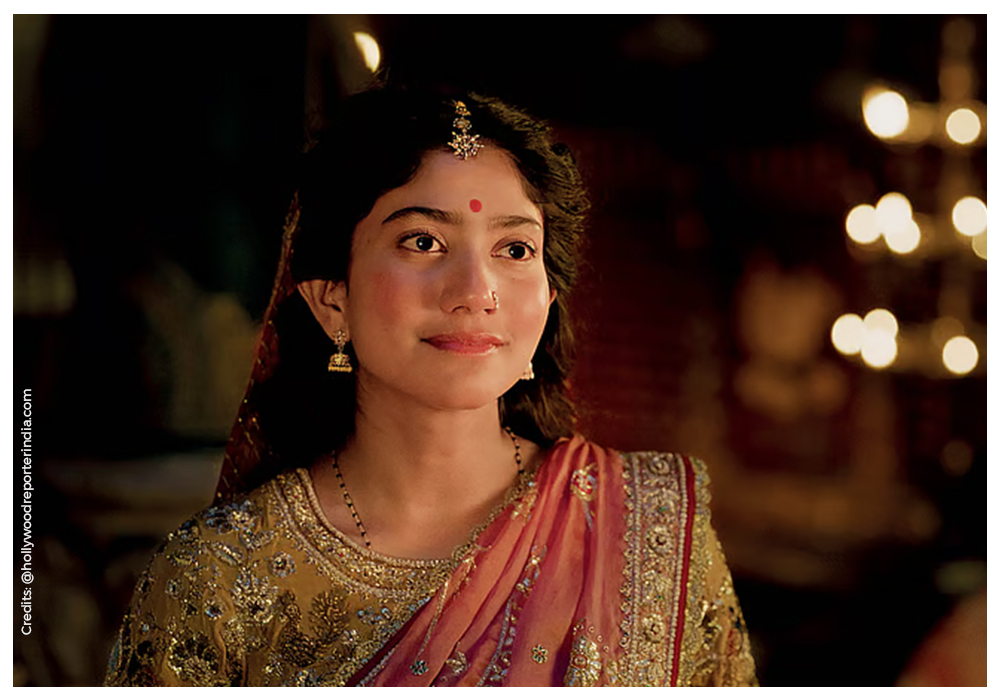
Sai Pallavi as Goddess Sita
The Sai Pallavi Sita look draws from a gentler, more organic palette. Earthy tones and lotus pinks dominate the costume language, paired with floral motifs that reference fertility, grace and the natural world Sita is so often associated with in classical art.
Her wedding saree represents one of the most significant costume moments in the film, built with embroidered detailing that signals royal status while staying rooted in traditional bridal craftsmanship from the period the story draws from. Her royal appearances carry richer textures and more elaborate embellishment, while her vanvaas wardrobe strips things back entirely, favouring simpler weaves and muted tones that reflect her exile and transformation. The costume arc for Sita across the film becomes a visual record of her journey, from palace to forest and back again.
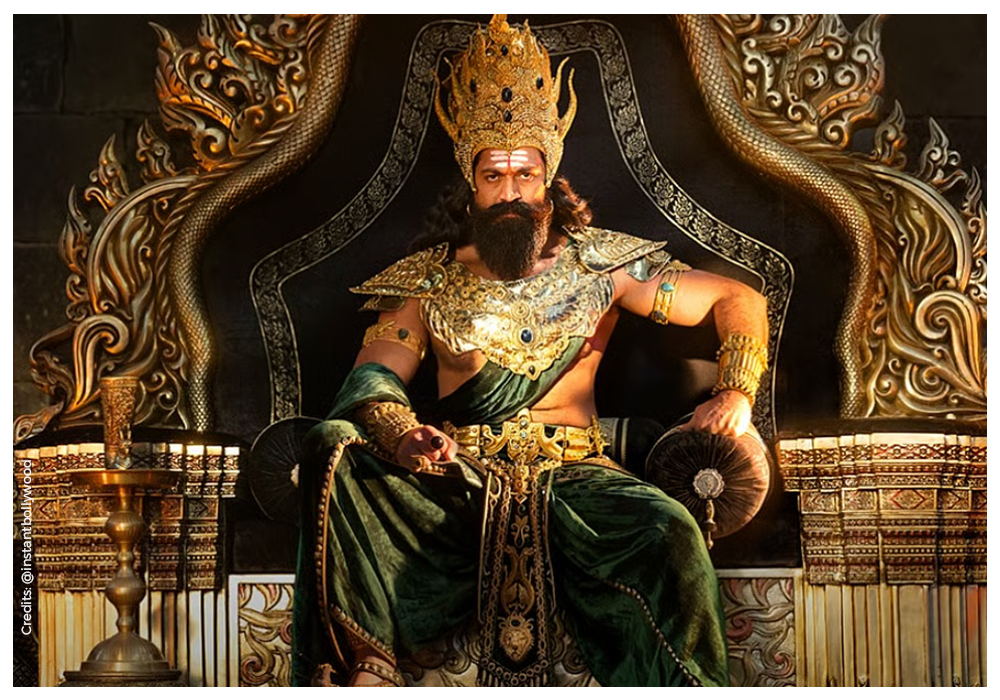
Yash as Ravana: Power Rendered in Gold and Shadow
Few characters in Indian mythology demand the visual complexity that Ravana does, and the Yash Ravana look leans fully into that duality. Darker colour palettes dominate, layered with gold detailing that signals wealth, power and his standing as a formidable ruler. Elaborate jewellery and imposing silhouettes work together to build a presence that fills the frame.
Rimple and Harpreet Narula’s approach here was less about villainy and more about magnitude. Ravana is a scholar, a king and a warrior, and the costume design reflects that layered identity rather than reducing him to a single visual note. The opulence is intentional, a costume built to command attention the moment he appears on screen.
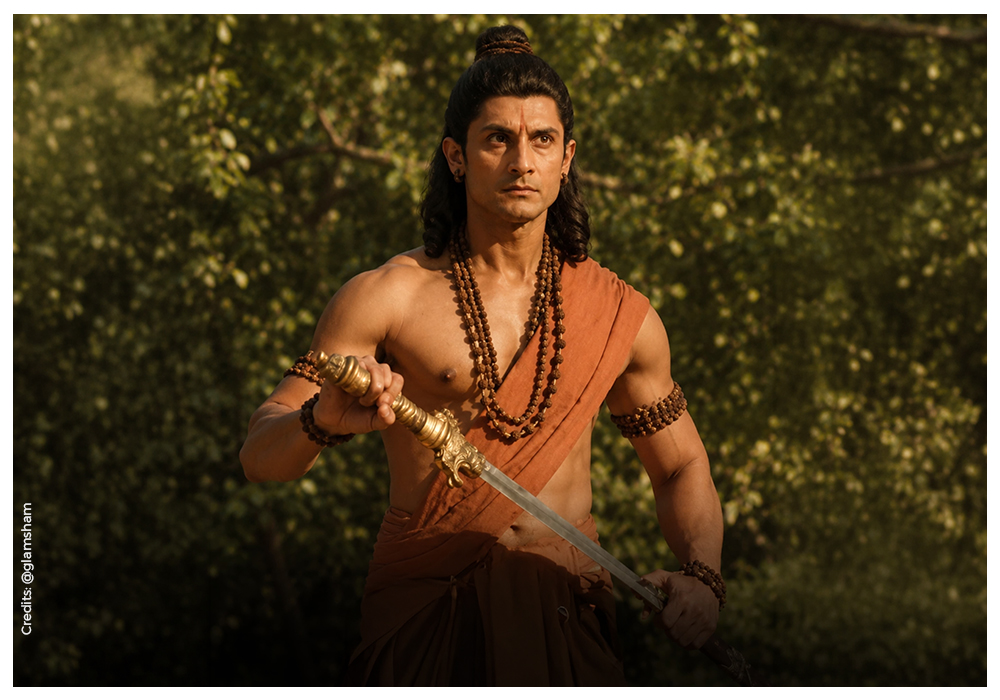
Ravi Dubey as Lakshman: Loyalty in Visual Language
Lakshman’s wardrobe was designed to work in conversation with Ram’s, using traditional garments and complementary colour choices that visually reinforce their bond without competing for attention. The styling details echo Ram’s restraint while carving out a distinct identity, reflecting Lakshman’s unwavering loyalty and his own quiet strength within the story.
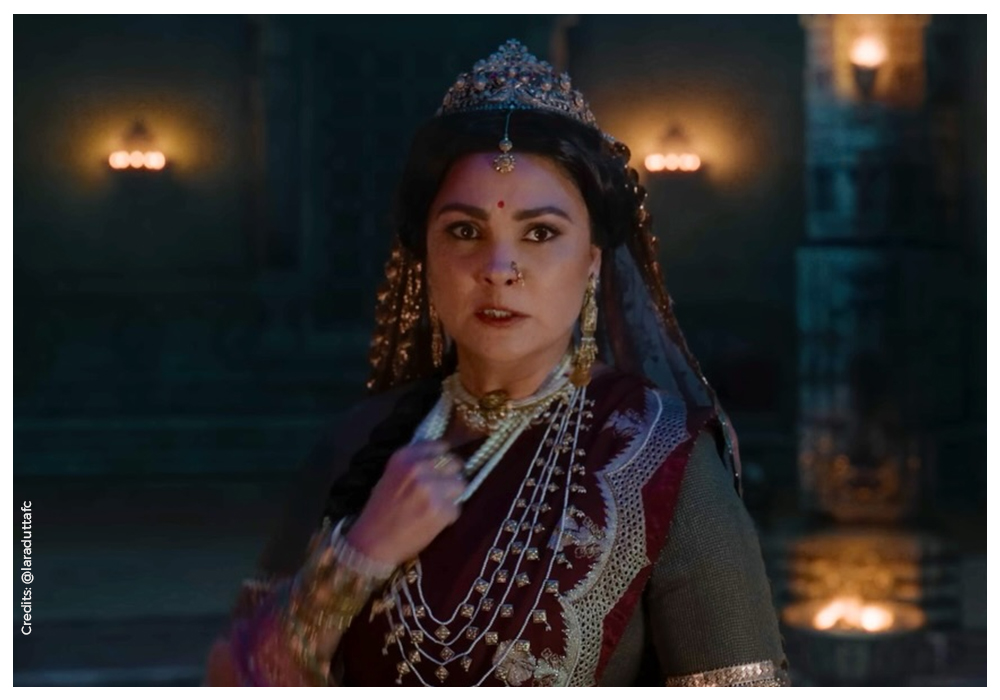
Lara Dutta as Kaikeyi: Colour as Emotional Complexity
Kaikeyi’s costume language centres on green and oxblood tones, colour choices that carry real emotional weight. These shades reflect her dual identity as both a devoted mother and a figure whose decisions carry the weight of political and emotional consequence. The costume design avoids painting her in simple terms, using colour to hint at the complexity beneath her character’s choices.
Rakul Preet Singh as Surpanakha: A Distinct Visual Identity
Surpanakha’s costume carries its own language within the film’s broader visual world, built to establish her as a distinct and memorable presence. The colour choices and styling details set her apart from the rest of the cast, giving her character a visual identity shaped as carefully as any of the central roles.
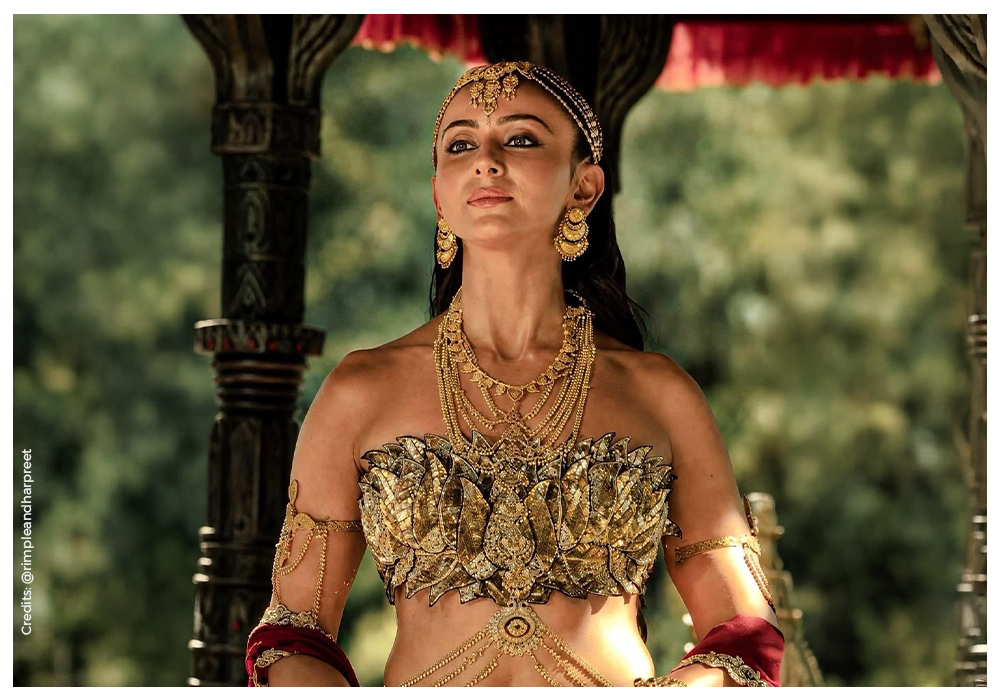
Textiles, Embroidery and Craftsmanship
Behind every costume sits an enormous amount of textile research. Rimple and Harpreet Narula worked with vintage textile archives alongside traditional weaves including Banarasi brocades, Chanderi and khadi, many finished with natural dyes to maintain historical authenticity. Embroidery techniques such as zardozi and marodi embroidery feature throughout the costumes, adding richness without tipping into excess.
These choices required close collaboration with weavers and artisans across India, many working within craft traditions passed down through generations. For the designers, this collaboration was central to the project, ensuring the costumes carried genuine craftsmanship rather than imitation.
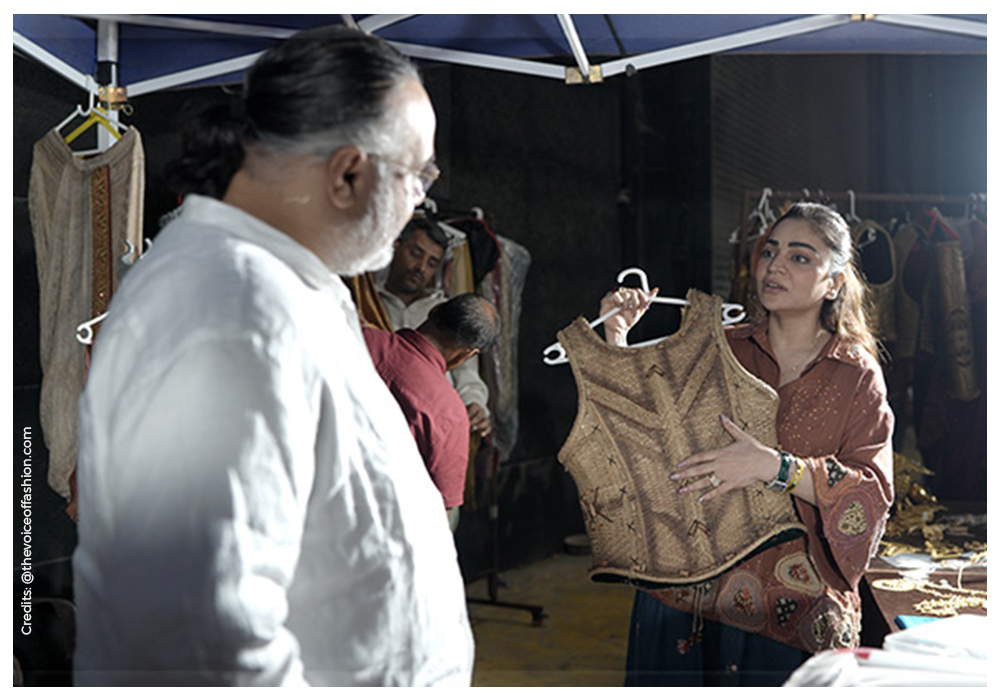
Jewellery, Crowns and Armour
Jewellery plays an equally important role in building each character’s presence. The designers collaborated with Amrapali Jewels to create crowns, ornaments and accessories that function as extensions of power and divinity rather than mere decoration. Armour pieces were handcrafted using materials including bronze, brass, cane and bamboo, grounding the fantastical elements of the story in tactile, real-world craftsmanship.
Tradition and Interpretation
Perhaps the most delicate part of this project was deciding where to honour tradition exactly as it has always appeared, and where reinterpretation could serve the story better. Questions around stitched blouses, draping techniques and specific visual references required constant judgment calls, balancing reverence for the source material with the practical and creative demands of filmmaking.
Rimple and Harpreet Narula navigated these decisions with the same philosophy that has guided their work throughout their career: costume as storytelling, never costume for spectacle alone. In a project as culturally significant as Ramayana, that balance between devotion and creative interpretation may be the most important design choice of all.
The post Rimple and Harpreet Narula on Dressing the Cast of Ramayana appeared first on Aza Editorials.